John and I are still consumed by what we learned in Belfast and now on an empty commuter train to Derry/Londonderry.
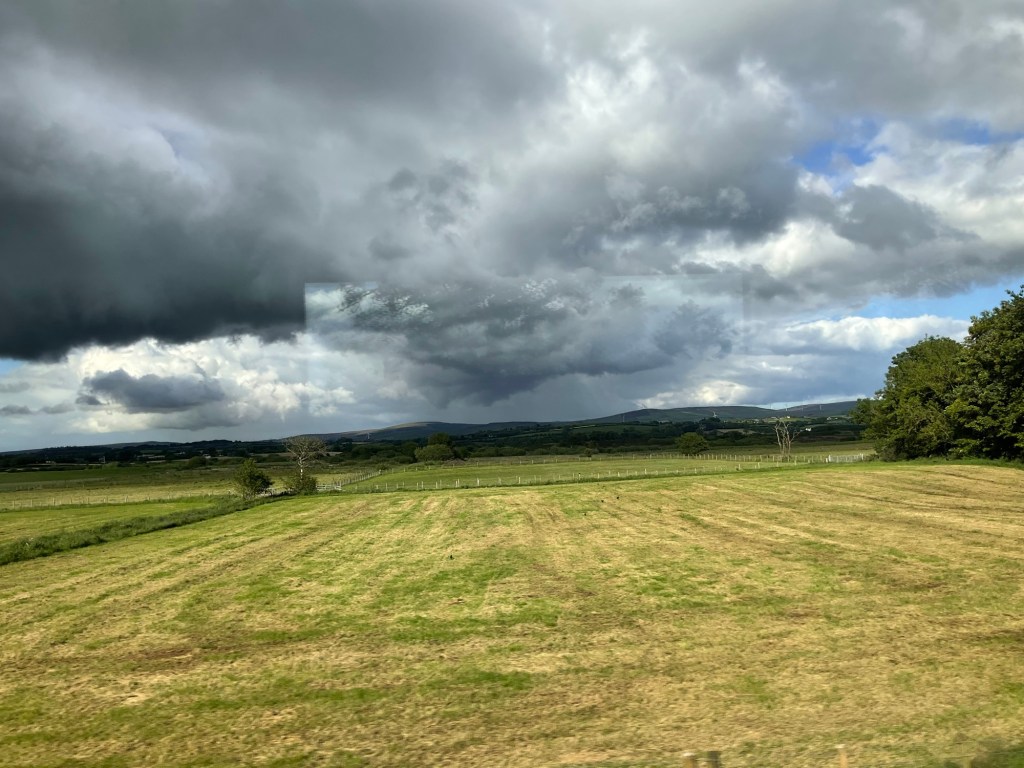
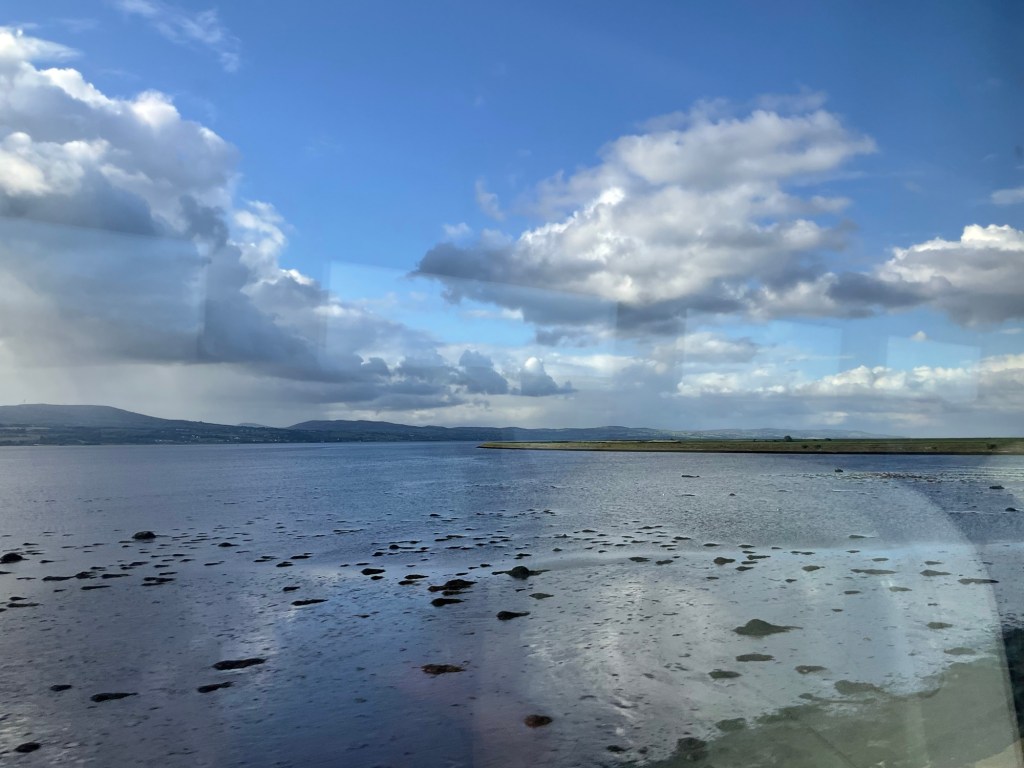
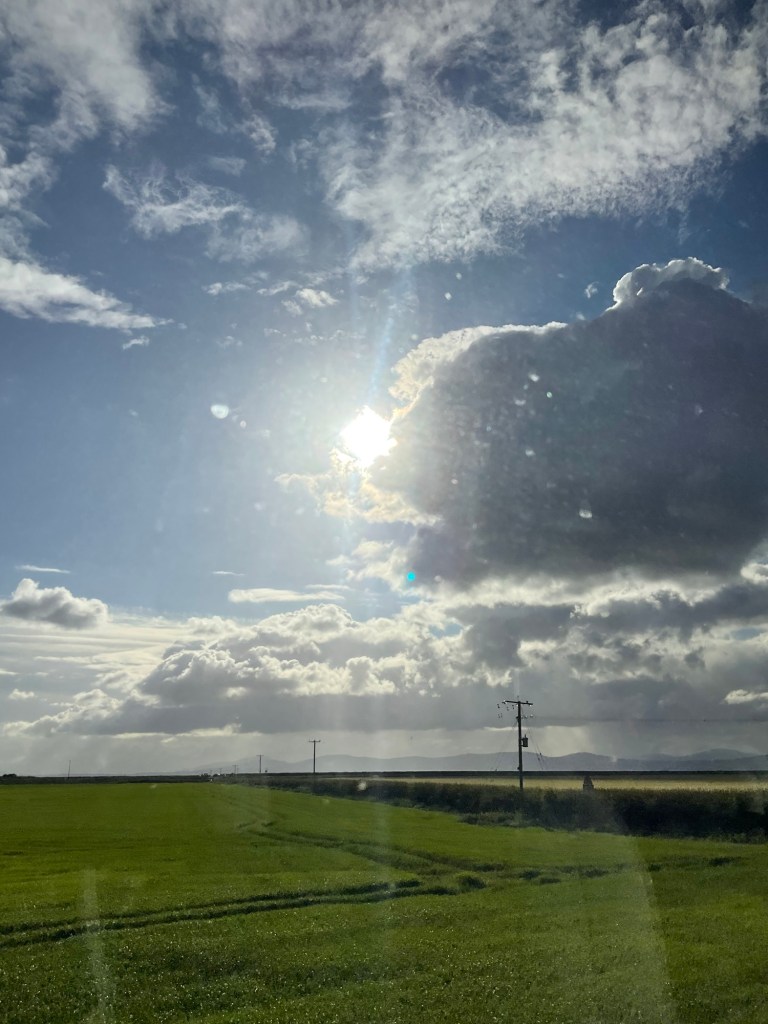
I can’t get over the sky and how it changes so rapidly as we whizz by.
John and I are still consumed by what we learned in Belfast and now on an empty commuter train to Derry/Londonderry.
I can’t get over the sky and how it changes so rapidly as we whizz by.
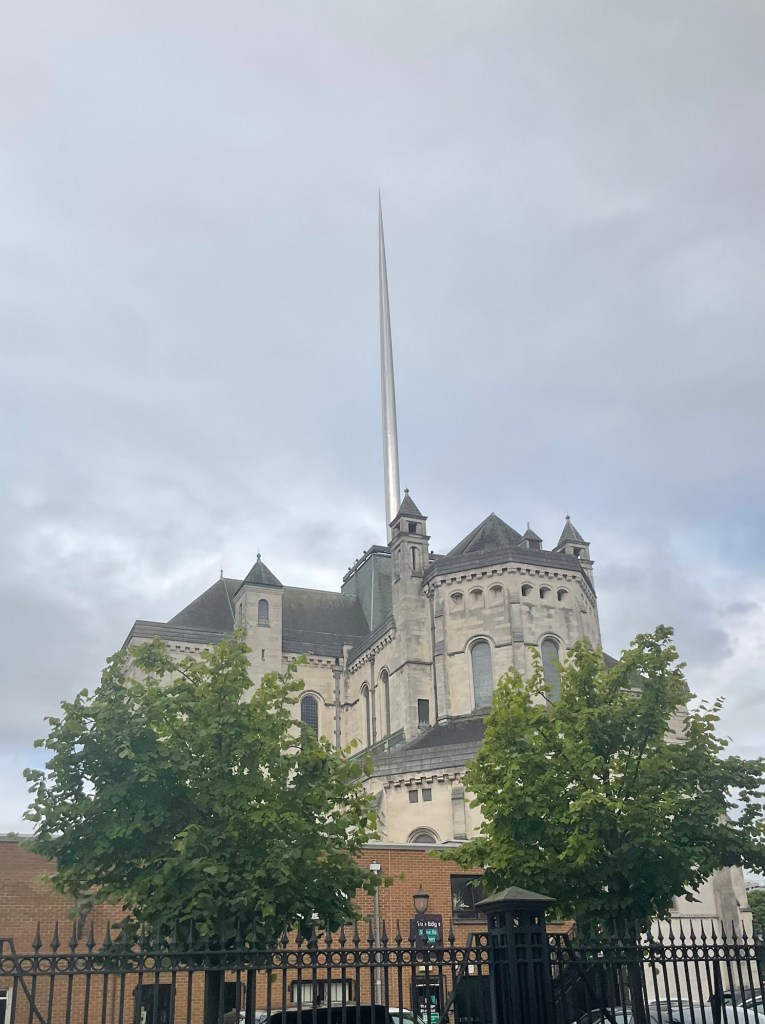
The apartment rental over looks the back of St Anne’s Cathedral. The cathedral has the weirdest spire. We don’t know the story behind it, but we are convinced that it was the cheaper option.
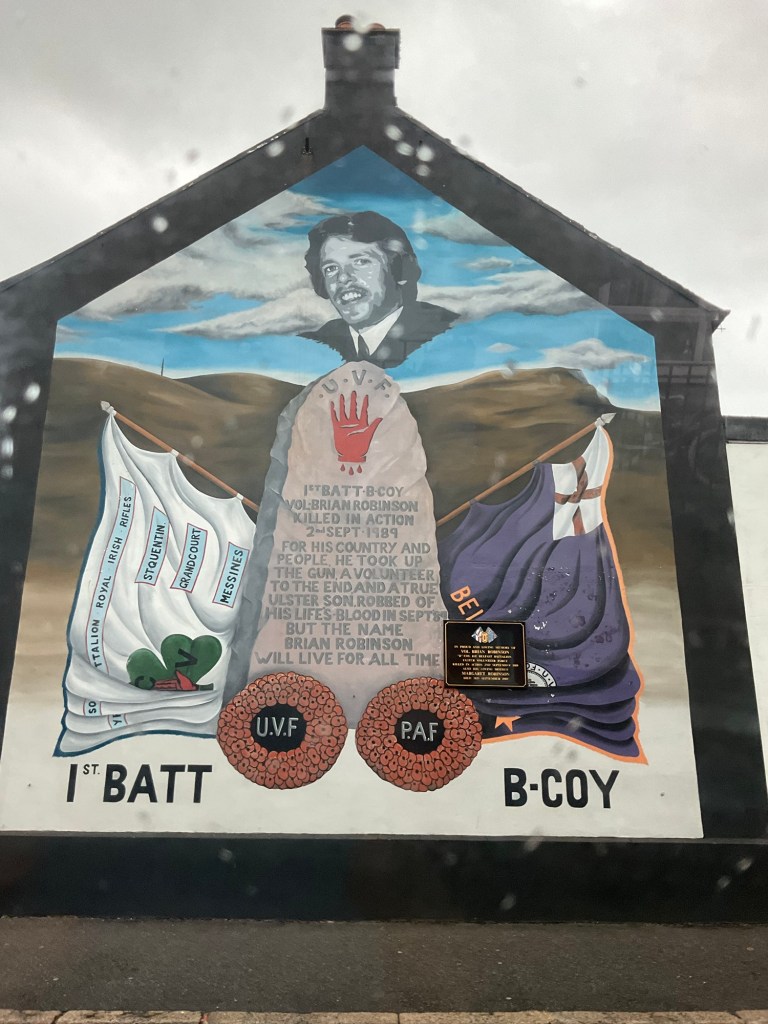
It is such a great message, we know our own truth, what we see, hear and experience. When we are told a story, it isn’t our truth, it is someone else’s truth and there is someone else with another side of that truth.
Francis was our tour guide in Belfast. He had many jobs over his 60+ years which makes him the perfect guide to take us through Belfast.
Coming home from school one day, Francis, a latch key kid, would be have been about 9 or 10. He hears a quick succession of gunshots as he makes his way home in west Belfast. Francis looks over his shoulder and sees a 15year old neighbour dead on the street, looks up to the roof , he sees the sniper pointing the gun at him. He scrambles for his keys and holds his body close to the narrow frame of the door. Bang, bang, bang the sniper misses and catches the bricks beside the house. The sniper hands his gun to his IRA buddy below, telling the other boy to get him. The British army is patrolling those streets in the early 70s.
A Catholic factory is targeted by men from the Protestant side. They capture two young boys and go upstairs to the administrative building, talk to a couple of secretaries who willing handover what money they had. No trouble! No trouble! The girls are told to face the wall and get down on their knees, they are shot in the back of the head. Running off they then shoot the two young boys as well.
A Protestant factory is within sight of this tragedy and seeking revenge, IRA men, early morning, walk into the factory and order Francis and two of his coworkers down on the ground. One of the men is disabled and can’t bend his leg so is struggling. The men with guns are impatient and shoot him, heart and head. Francis comforts the victim as he lies dying and the men run off. They are not caught.
Francis shows us a picture of his father’s friends from the same era, one is with UVF and in prison for the mass murder of 500 Catholics, another is in jail for killing a couple more.
About 25 years ago, Francis takes his 10 year old daughter out to buy a television set. She has to stop downtown to let her friends know that she won’t be joining them, she gets out of the car, lets them know, and is chatting too long while Francis is parked awkwardly on the street.Hurry up, let’s get going. She is in a huff, they drive away, and two minutes later a bomb goes off in the location they just were, killing one of her friends she was just talking to.
The trama of these multiple first person accounts permeate and destroy lives.
Francis wants to leave the past there and move on. There are faults on both sides. Both were awful. Leave it be and move along. But in Belfast there are these constant reminders.
A peace wall was erected in 1968 that runs along the river through the west side of Belfast. It was to keep the peace and the Catholics and Protestants apart. The division was to be for 48 hours. They became permanent walls with gates that still are locked today just to keep the peace. is there not peace?
Police departments are fortified with cameras, razor wire and tall walls.
Cameras in the streets are monitored by the British police.
Graffiti “This is are land” where new mixed housing is going in. The spelling mistake seems indicative.
There are murals that don’t tell the whole story of the “troubles”. And tour groups that take tourists to these false narratives.
There are political parties that benefit from fear and ensuring people remain suspicious and untrusting of each other. That’s how they make their money. very much like other places in the world.
Take down the murals, take down the peace walls, build more mixed communities. Find the truth. Do this in order to move onto something better.
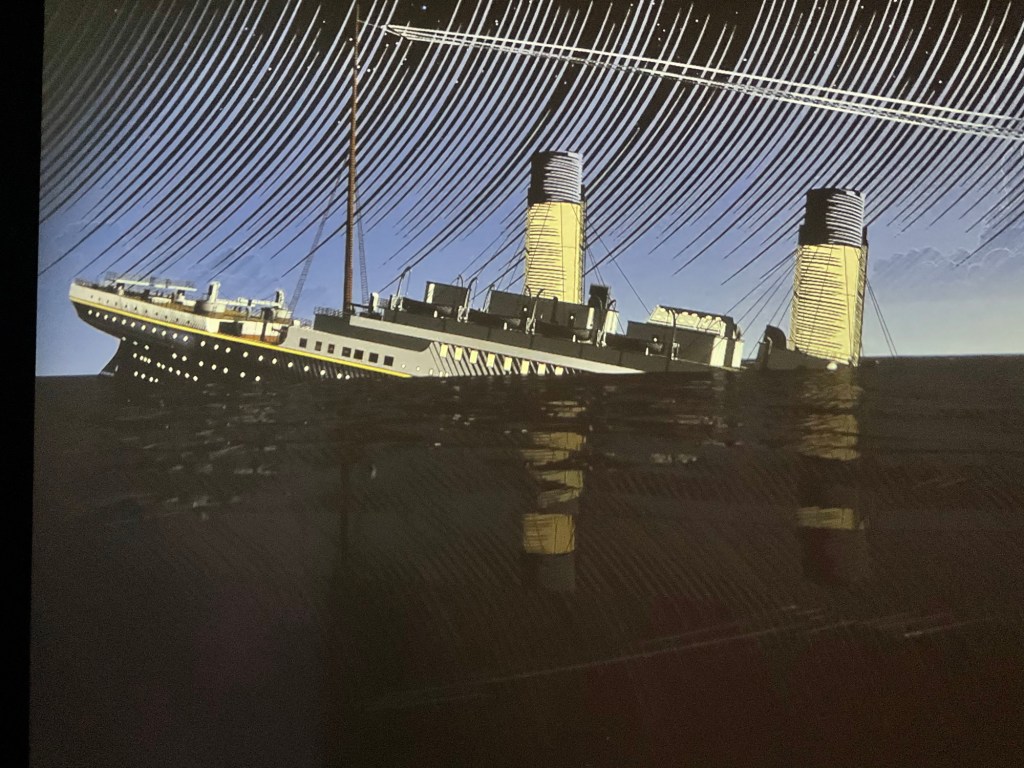
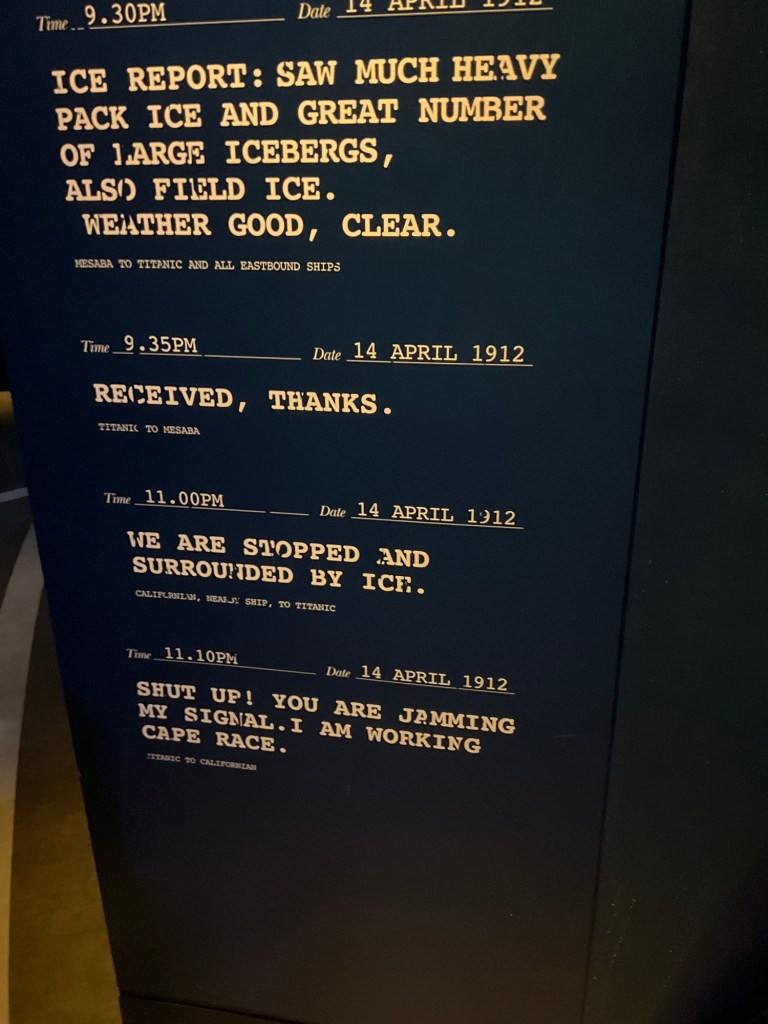
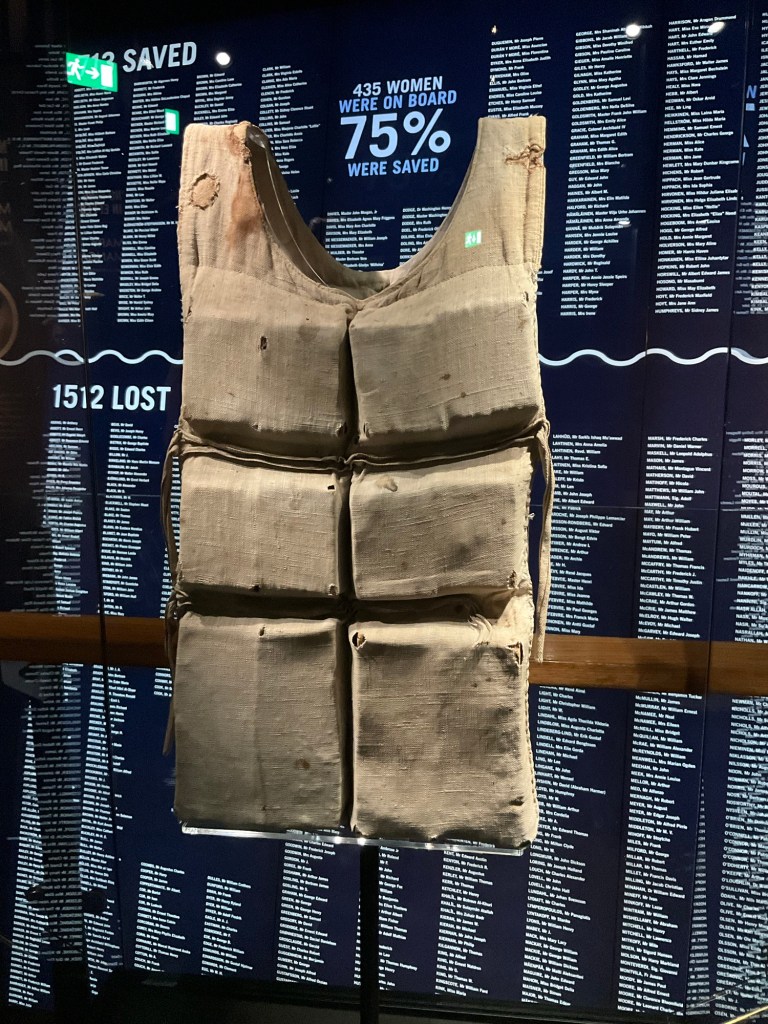
I wasn’t going to bother with the Titanic Museum, it is one of the best museums in Europe, but we all know the story….told so many times.
I was so wrong.
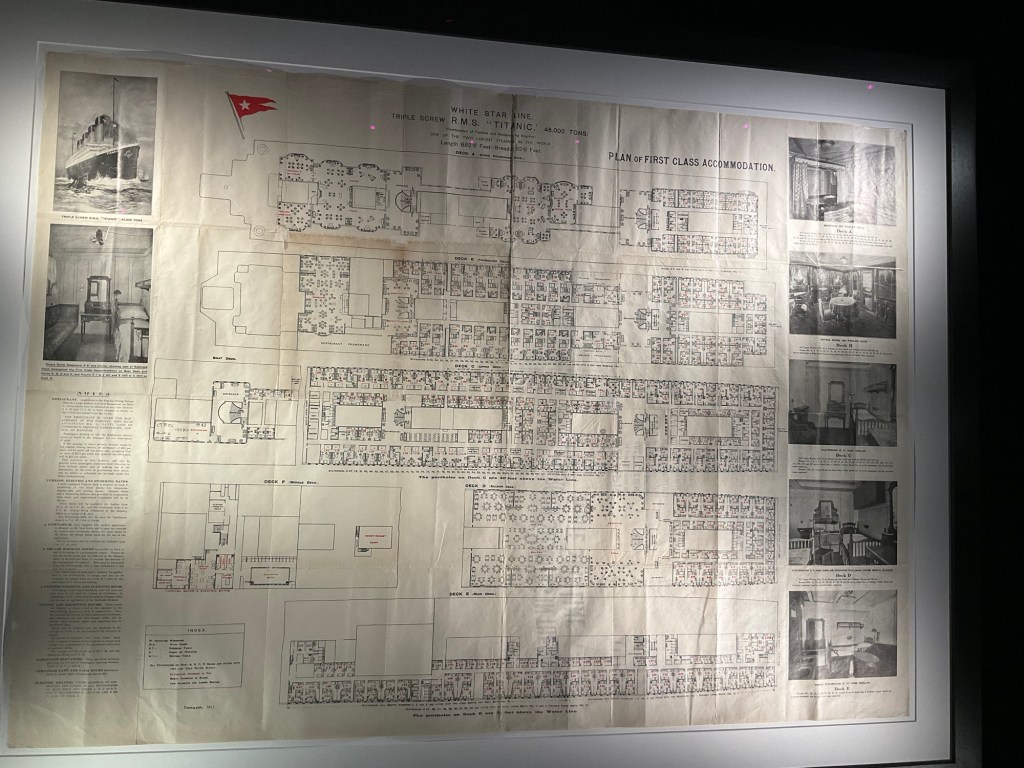
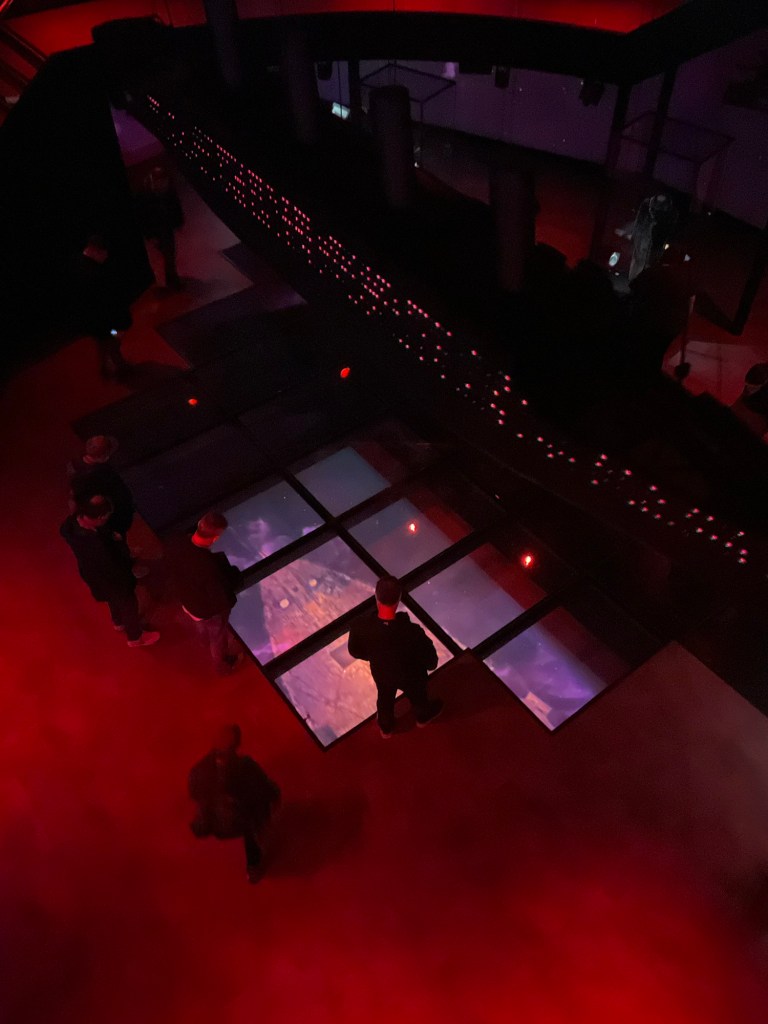
This is a wonderful museum. It talks about the Titanic in context of the times it was built, why significant, the Industrial Revolution and the boom in Belfast manufacturing and how a waterway was transformed from ‘Flats’ to a passage to the Atlantic
And the craftsmanship that went into the ship itself.
The Titanic was one of three ships built in the Belfast harbour. The waterway here is very shallow and the ship was very heavy. The boilers and engine alone were massive. Two ways to conquer this, make the waterway deeper and only build enough of the ship so that it floats and add the guts and the frills of the ship after when it is in the water floating. Every piece that was on the ship, with the exception of lighting and carpets, were made in and around Belfast.


In Ireland, in the 1700’s, taxes were collected by the church. In this case it was the Church of Ireland (I am assuming Anglican). So there was a push on to convert people from Protestant, Catholic, Presbyterian to the Church O’Taxes.
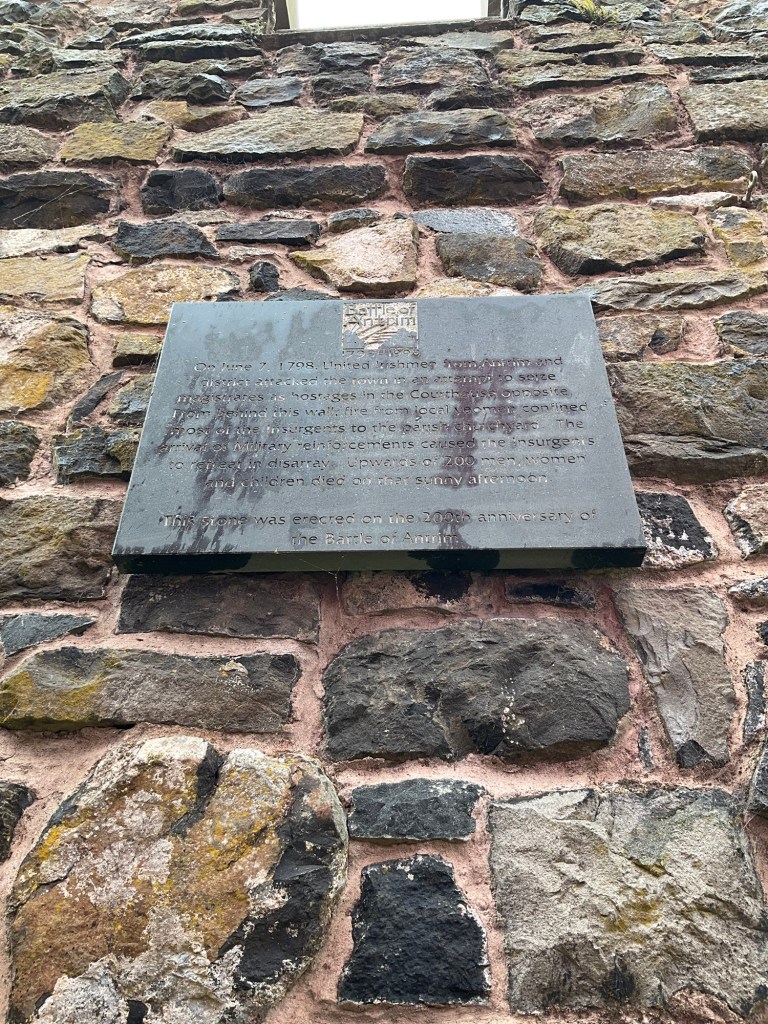
Four thousand men walked down the main street of Antrim to the castle were the force of two hundred British garrison met them. The garrison had a call out as well to neighbouring garrisons to come. Plumes of dust, pikes, shots, fire, mayhem.
The county governor, John O’Neill killed in the street.
The supporting garrison came and and the rebels fled in panic.
Henry McCracken, the rebel general was hanged.
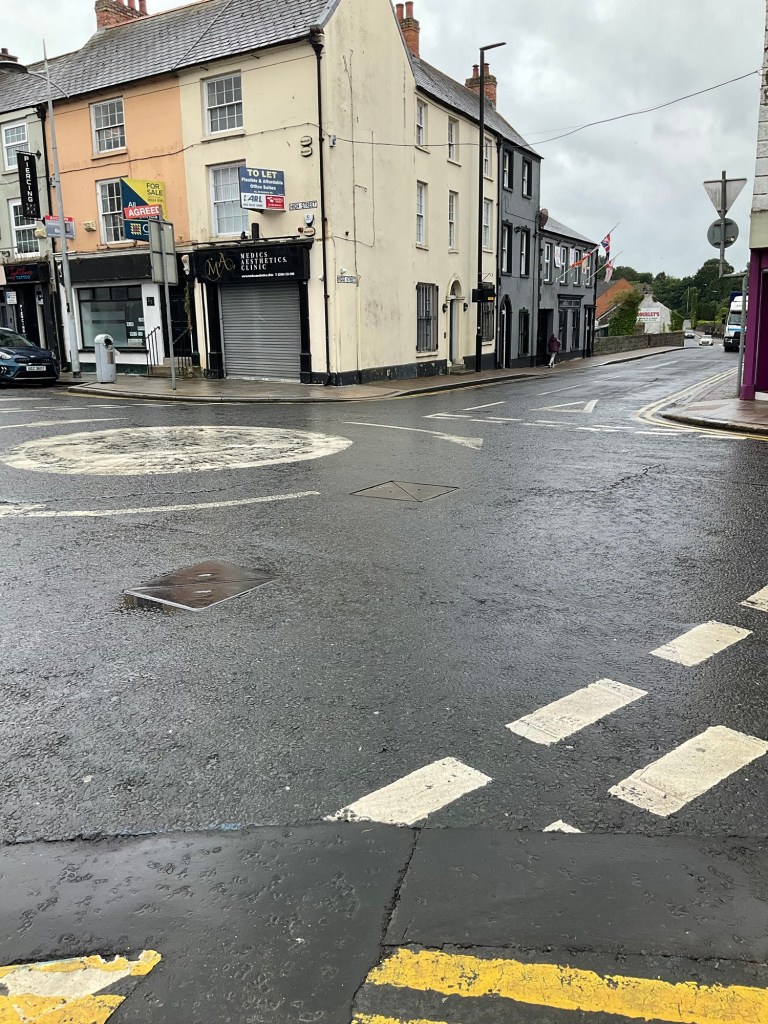
The Huguenot community fled France in the late 1600’s. A French proclamation made it illegal to practice the Protestant religion and they were prosecuted. About ten thousand Huguenots made their way to Ireland and some settled in a community outside Belfast. In the community, they farmed and they manufactured linen.
John’s family came from this French lineage. His grandmother grew up in the area of Portglenone. Portglenone translates to point of the river/stream. In this case, it is the River Bann which reaches out to the North Atlantic.
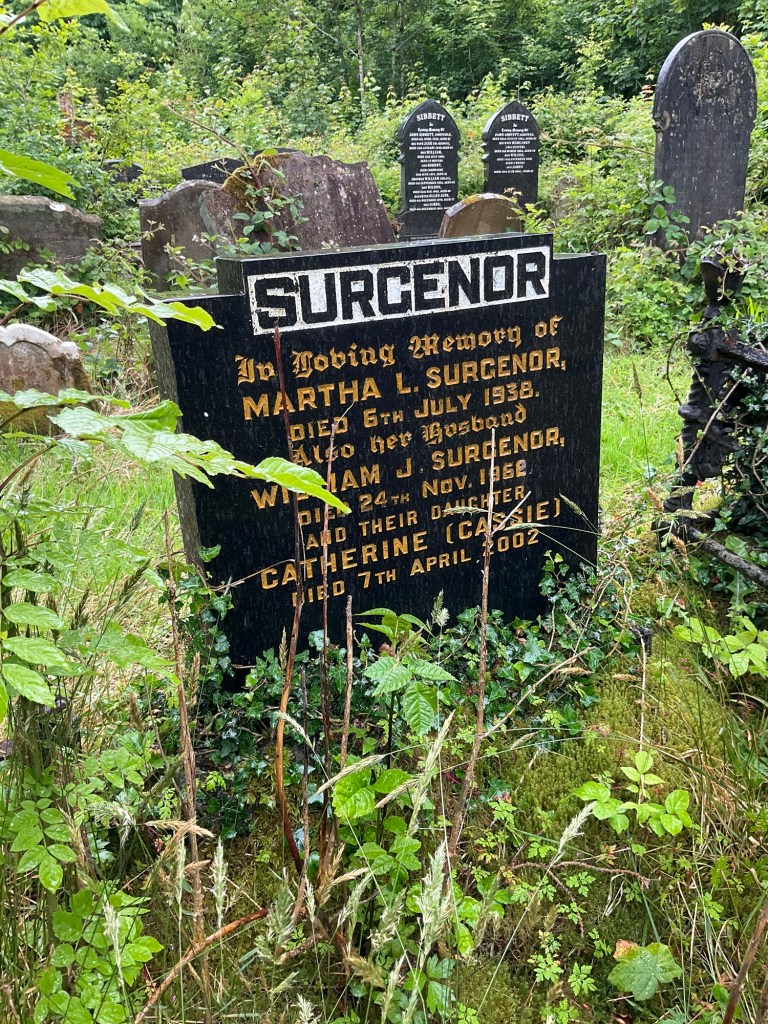
So easy to hop on the train. The ticket prices are reasonable and many people are on the train mid afternoon.
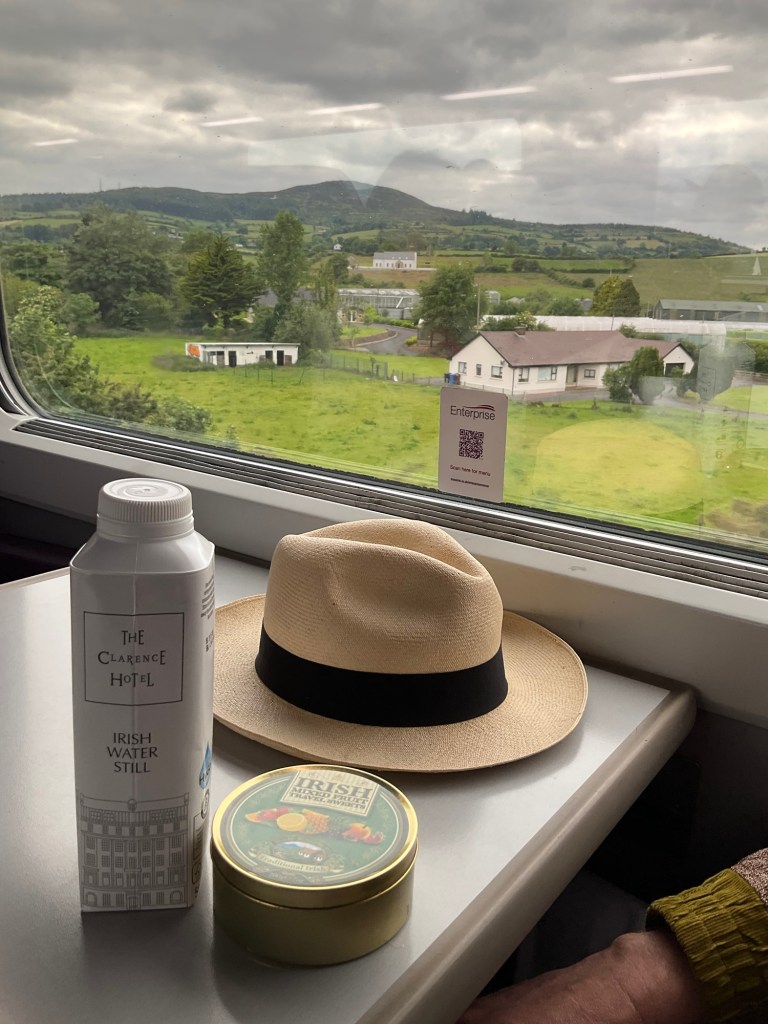
We travel smoothly through the countryside to Belfast. The scenery reminds me of Southern Ontario, rolling hills and plots of land with the occasional sheep farm, cows grazing and some pigs beside the barn.
On the train, a lawyer shuffles through her papers making a to do list, she gets off and a beautiful young girl sits across from us with a wide smile and politely asks if the seat is taken.
At the other end of the traincar and the music of the ride is a bunch of footballers (I am assuming) are loud and rowdy, enjoying teasing each other and laughing.
Across the aisle is a women with short blond hair, tattooed and things in her earlobes, she secretly drinks beer that she has brought with her. She doesn’t seem rough at all, perhaps just playing at being independent and confident.
The man sitting across from her is on his cellphone. “Just tell them we met by accident at the pub”. You hear a women’s voice on the other side of the line, high pitched and muffled. A quiet “I love you” as the train pulls into the station.
We arrive in Belfast.
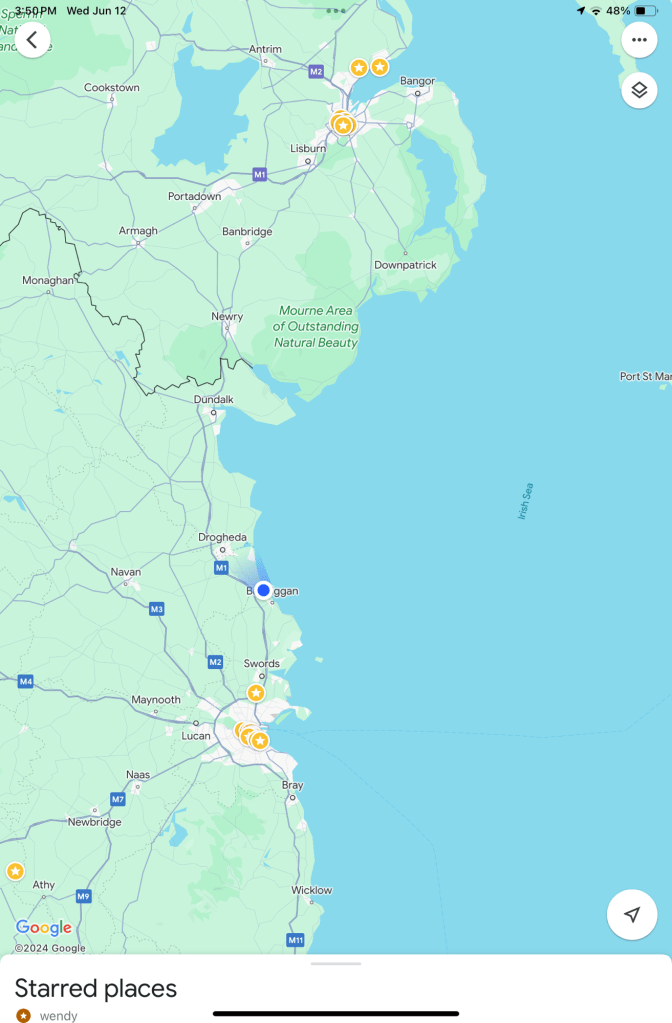
There were about 4million people in Ireland for a long while and this has swelled to around 6 million over the last couple of years. Displaced from Ukraine, other conflicts and more opportunities. Couple of times people have mentioned that it still isn’t the population when the famine happened ( mid 1800’s).
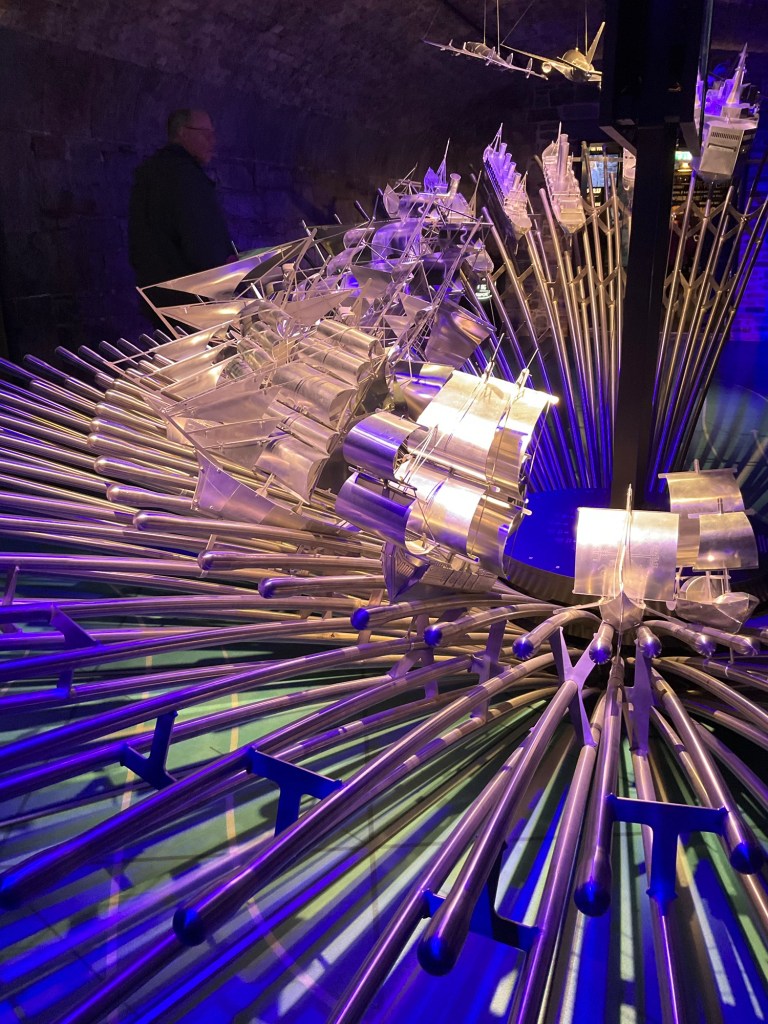
Ireland is defined as much by the people that stayed as the people that left.
This is the vision of Coca Cola CEO who created EPIC (The Irish Emigration Museum) whose family came from Ireland and settled in America.
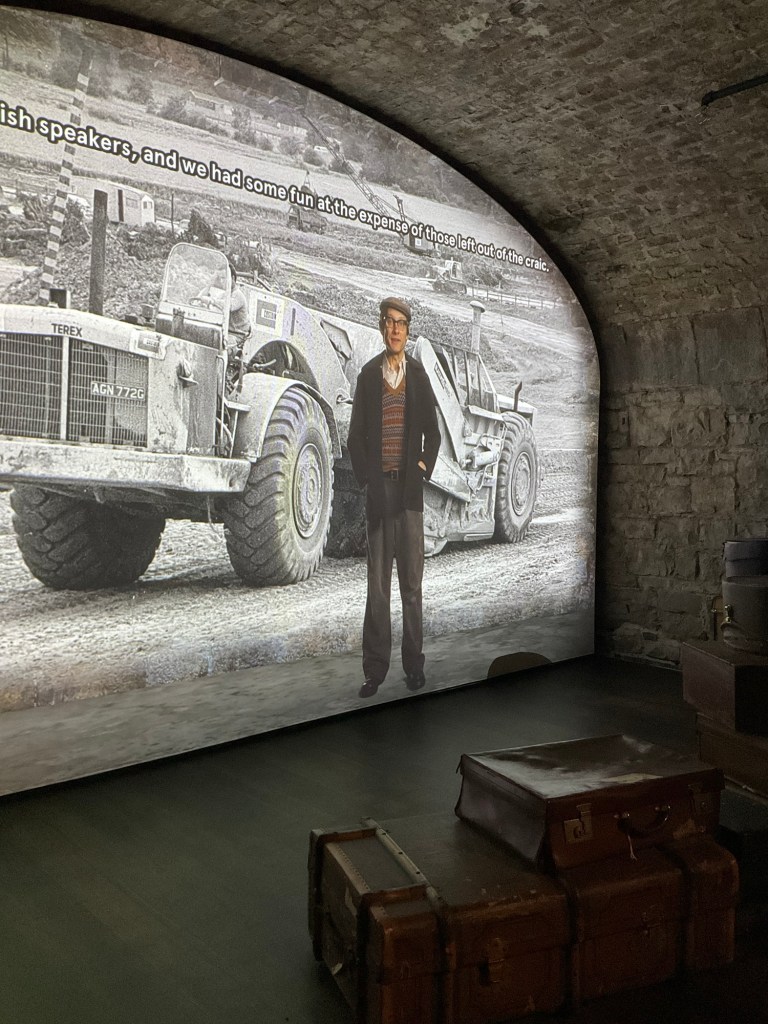
The potato famine was a big cause for movement and in the 1800’s, 60% of the immigrants to Canada came from Ireland and settled. Ireland, like England, would also ship their convicts to Australia. ?Then the Irish independence desire in the early 1900’s and 1970-90’s. Well educated and English speaking, who wouldn’t want to emigrate somewhere. And what country wouldn’t want such lovely hard working people. And the Irish went everywhere.
Some of the people featured are a bit removed from Ireland. Like JFK was the great grandson of direct emigrants from Ireland. Still they claim him as their own. All good.
The museum is fun and interactive as they tell the stories of what happened to the people who left for a better life and their descendants.

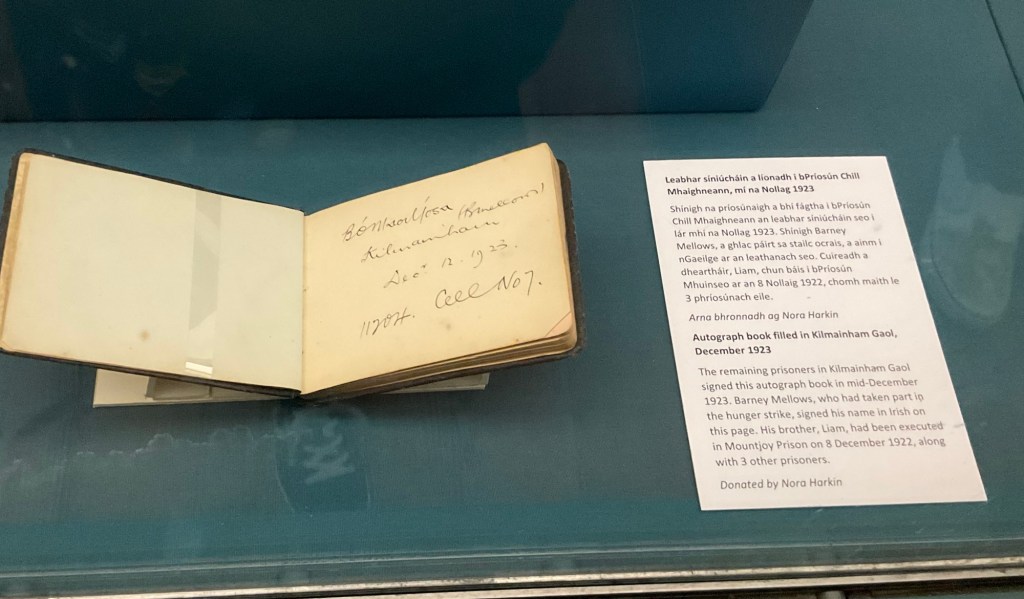
Fascinating that the prisoners in jail would have autograph books.

 The world around me