The Atlantic

I thought yesterday that it may be fun to swim in the Atlantic.

It was very grey and wet this morning, periods of showers. I get on my swim suit and yoga pants and a long sleeve shirt. John, not really convinced puts on his swim shorts and quick dry jungle pants and shirt.

We head out, now it is really raining. We come back in and wait five minutes.

The heavy rain stops. I am in my sandals that I have barely worn this trip. The world can finally see my pedicure.

We trudge out. Raining softly, we find a spot to go down to the beach. I slip off my sandals and carry them in my hand. We step over the kelp, no jelly fish on the beach today.

I walk up to the water and put my foot in.

Damn that’s cold. Perhaps I will just put my foot in.

Couple of hours later, bright sunshine and still windy. Too late to swim.

Loop Head

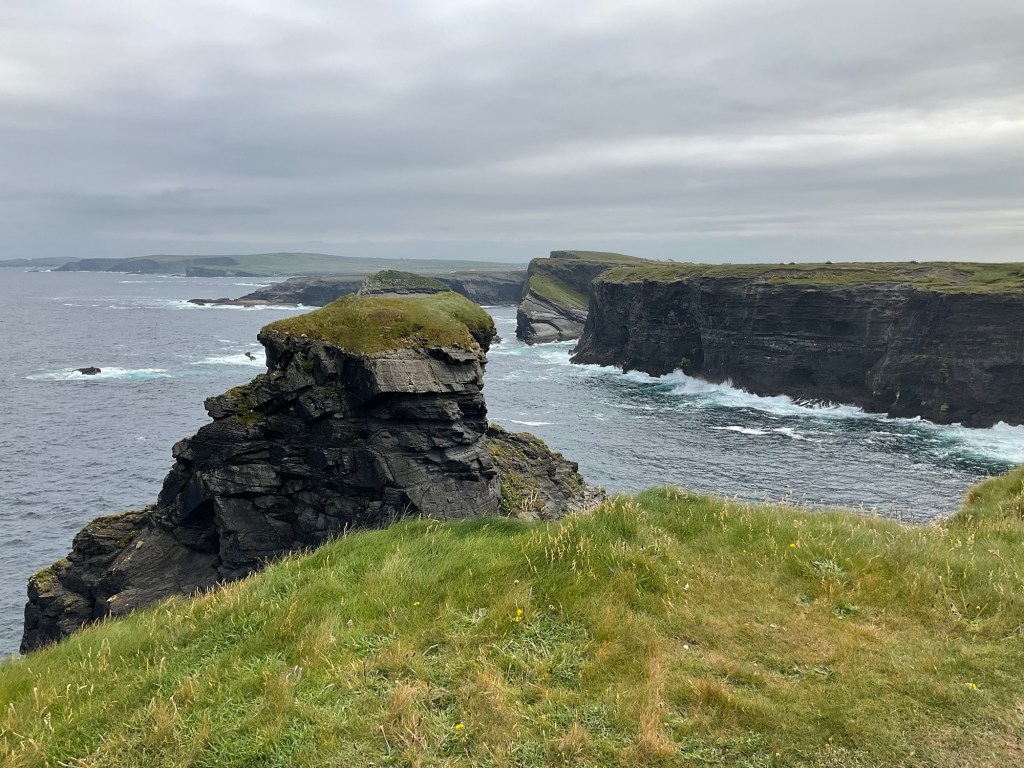
Isn’t the name Loop Head intriguing.

Worried about a witch chasing him, a man jumped a chasm and the witch followed . He jumped back and witch fell down the cliff. Originally called Leap Head, eventually it became Loop Head. Loopy story for sure.

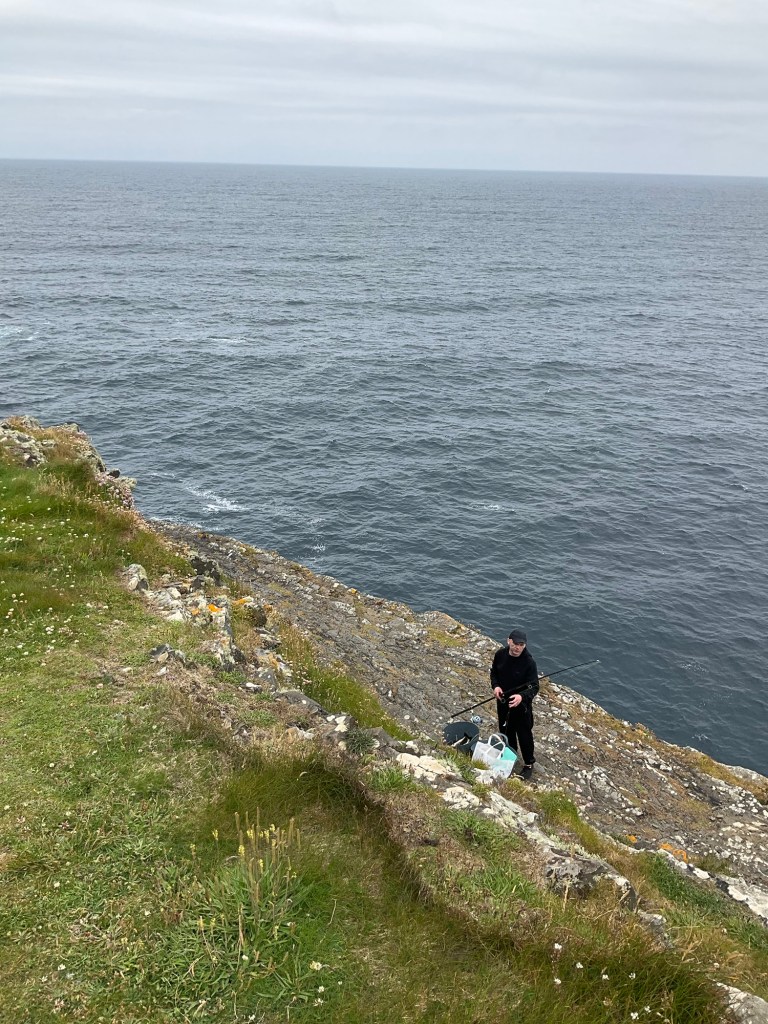
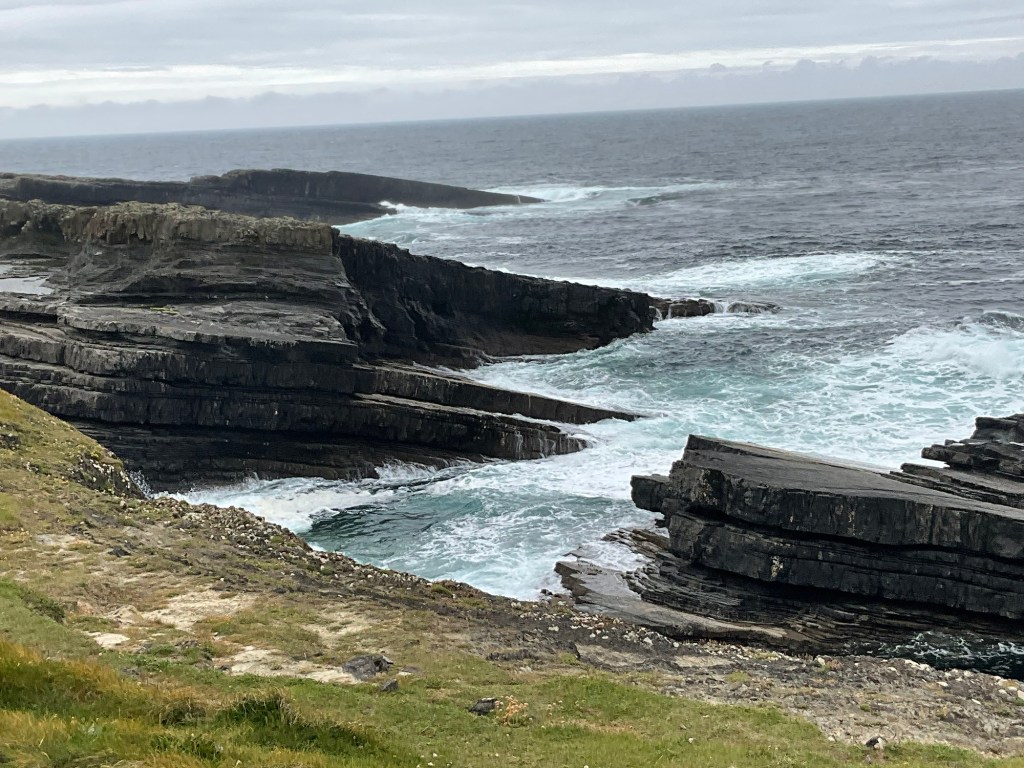
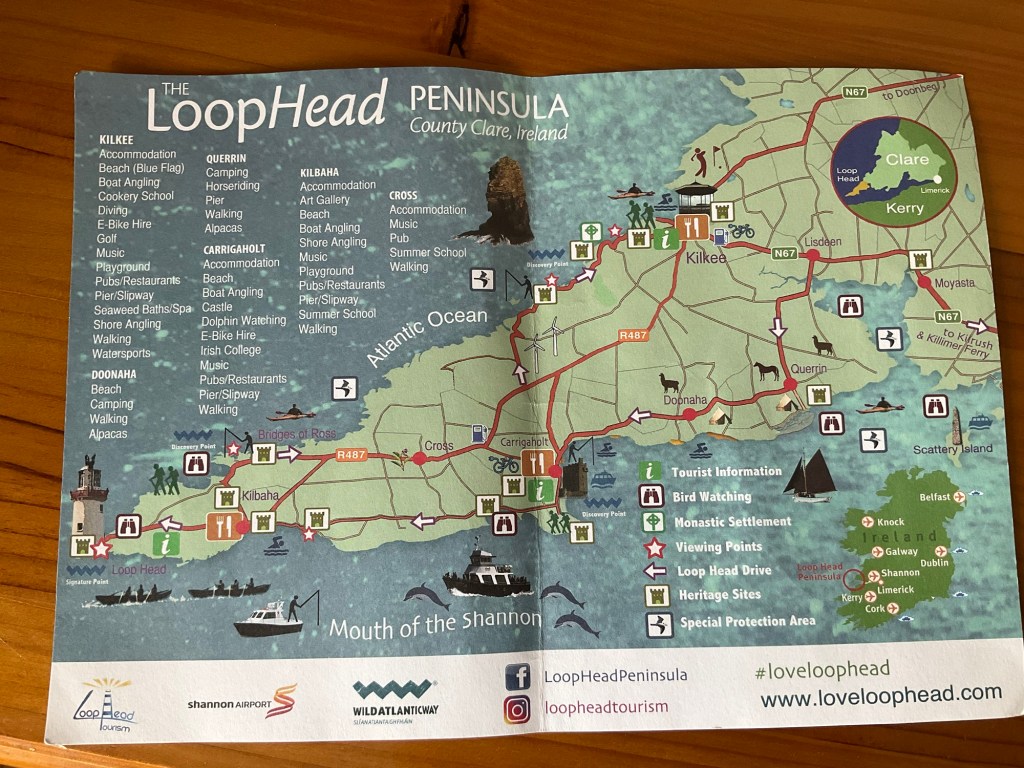
Loop Head is a trail from Kilkee, where I am visiting my aunt and uncle, to the furthest point west in Europe reaching way out to the Atlantic.

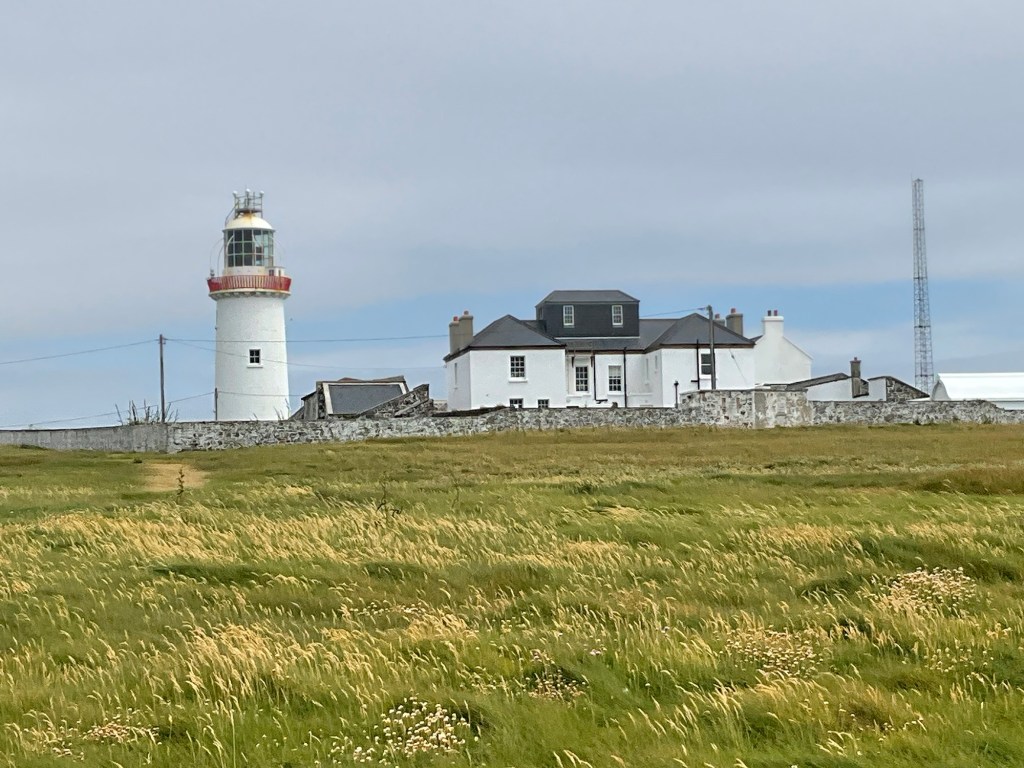
A working lighthouse signals boats to pass to the Shannon River or out to the Atlantic.

Picture from the lighthouse museum. EIRE you see written on the ground is made up of rocks and was used to signal the Germans and Americans to not bomb here during the Second World War.
The lighthouse

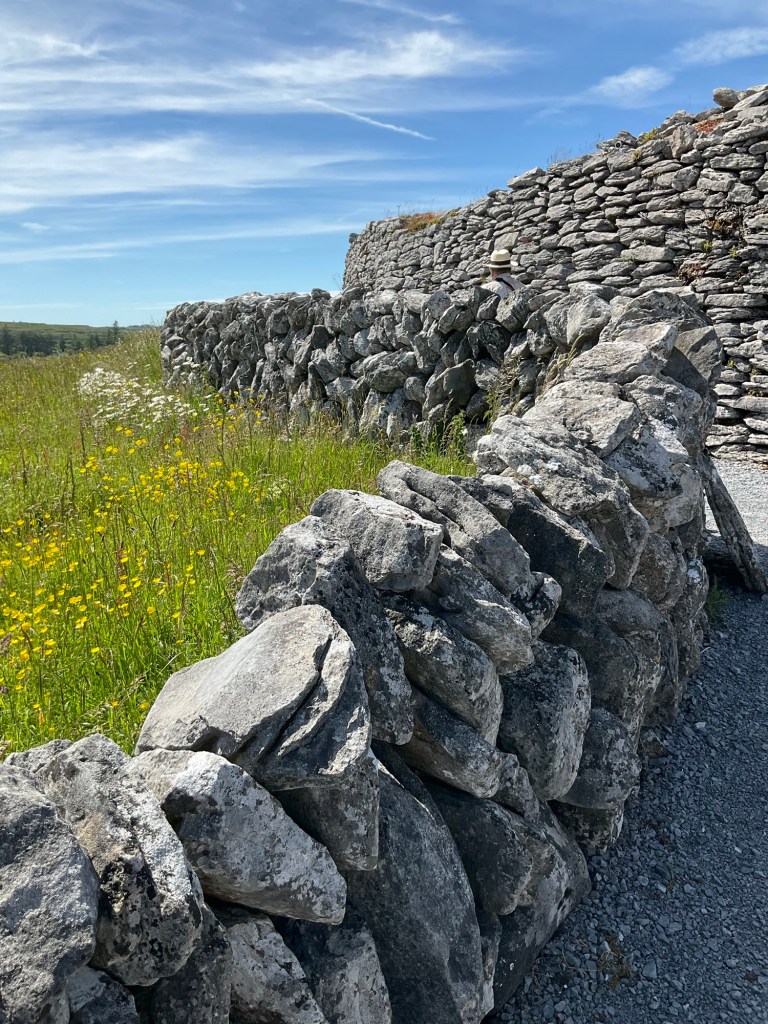
1000 AD

Communities around County Claire built these forts, about 500 in total and they would communicate danger through smoke signals to each other. Pretty sophisticated stone designs.

Sir Cornelius O’Brien

Cornelius was a landowner in the 1800s also a solicitor and city counsellor. He was very liberal for his time, believing that pulling people out of poverty by paying them a living wage was also beneficial to society as a whole. He also charged a fee for people to visit the Cliffs of Moher and redistributed those funds back into the community.

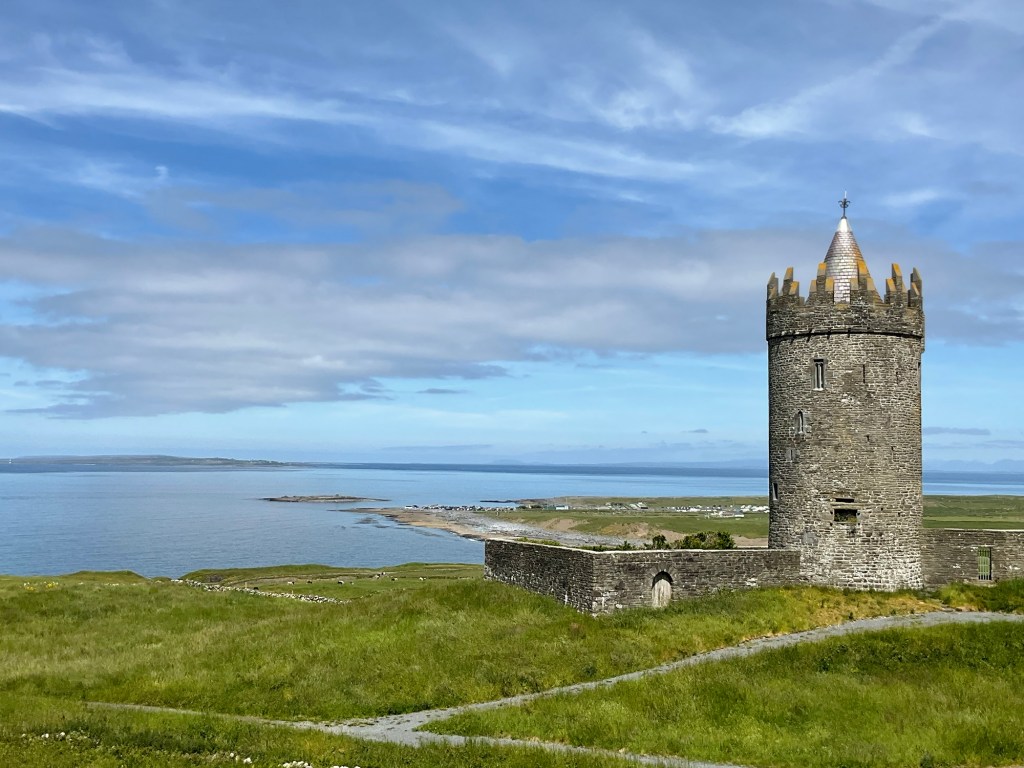
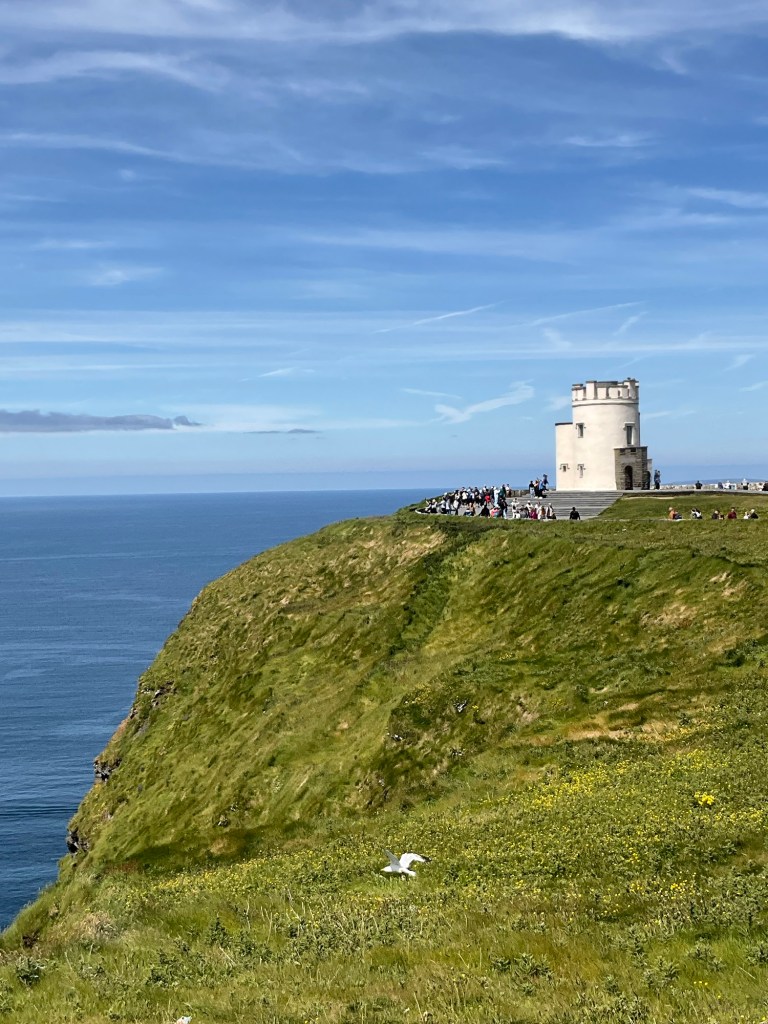
The tower at the Cliffs of Moher he built as an observation tower for people to come and see the Cliffs in all their glory.

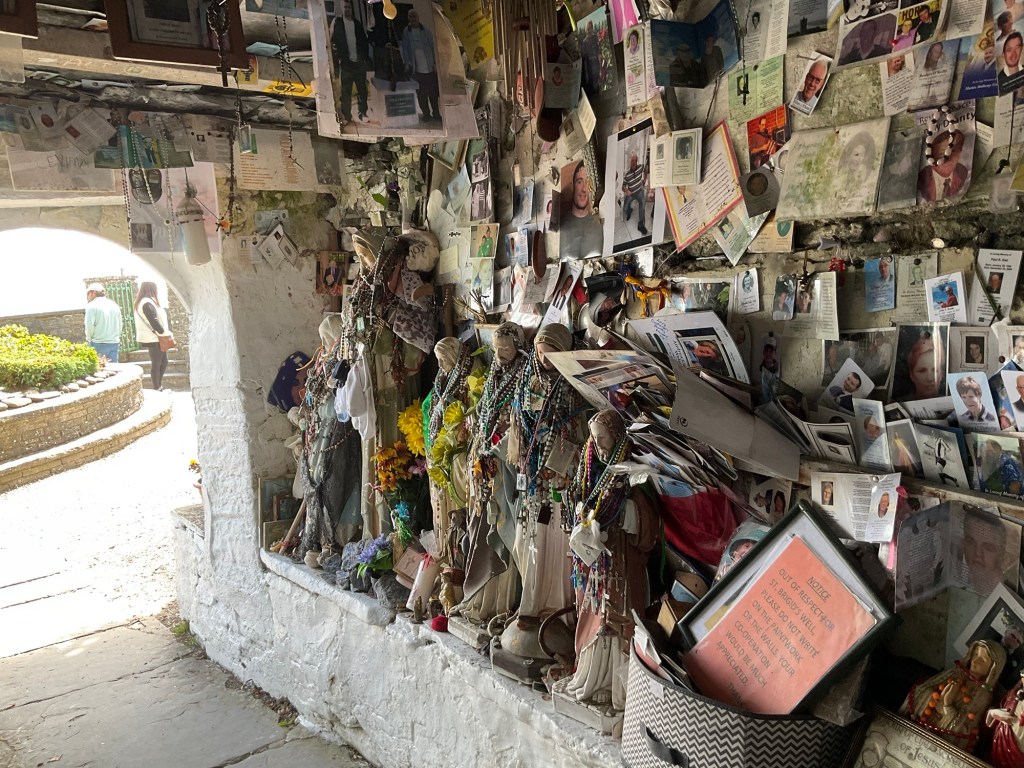
His grave site is close to St Brigette’s Well. These Wells are dotted all over County Claire and were put in place at the time of Monasteries and St Patrick. St Brigette was the female equivalent to St Partrick, converting people. The Wells themselves had different healing properties to cure the sick. I am curious why this one is so close to a cemetery….just not sure how effective they really were.

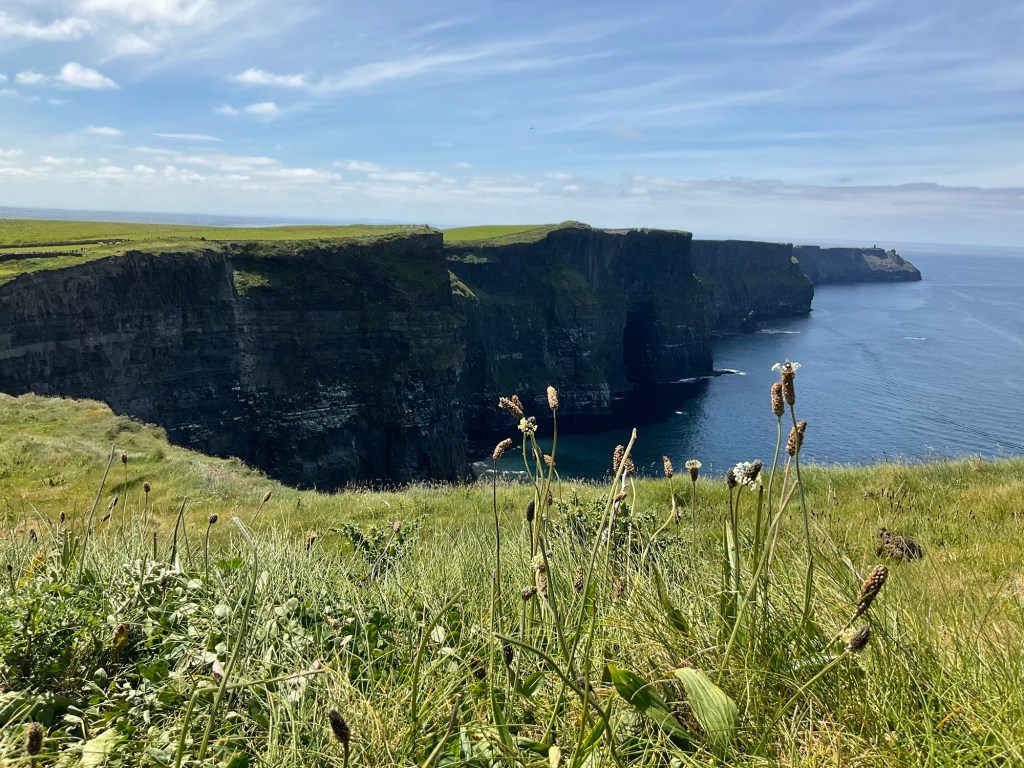
Cliffs of Moher
Cornelius’ tower
Scraps of wishes at St Brigette’s Well

The Burren

Never heard of this place before and it is definitely one of my favourite places we have visited.

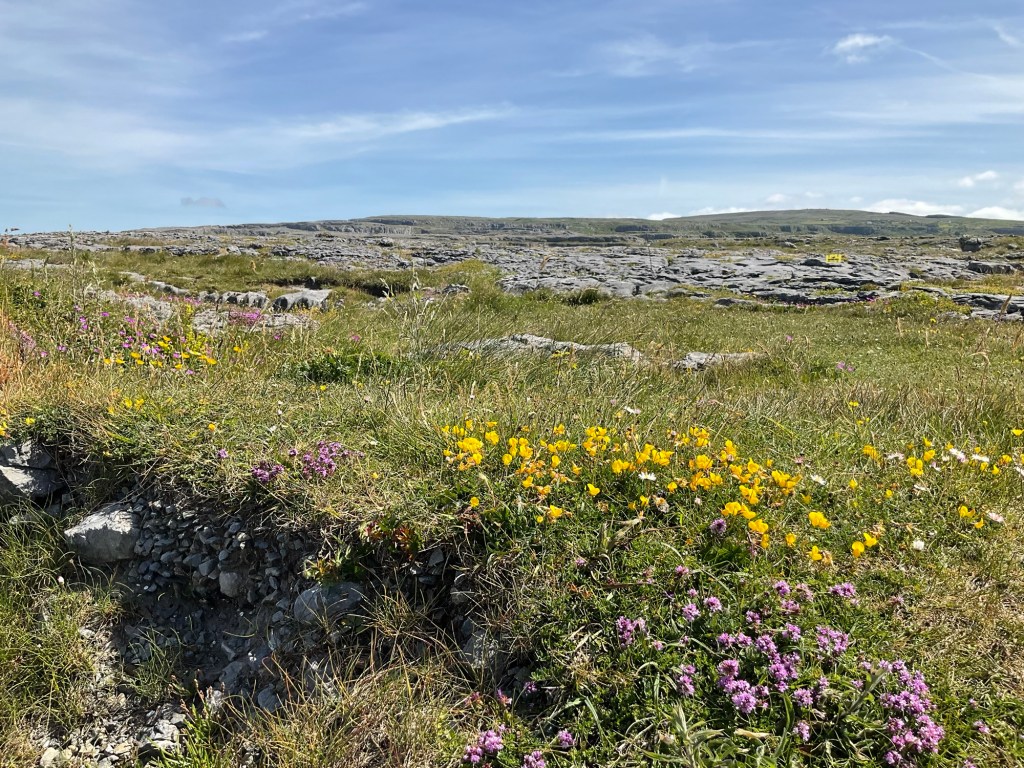
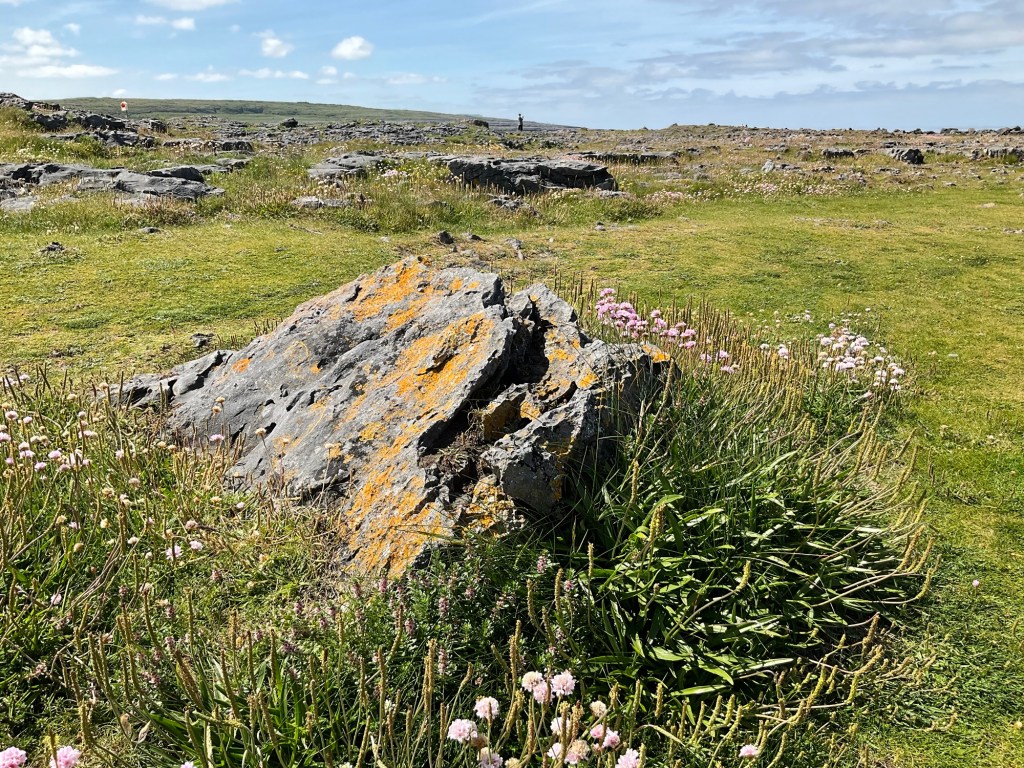
It is from the ice age and are limestone rocks that are gathered together over a large swath of the County Claire. Cracks form in the rocks where small plants and flowers grow.

Farmers do let their animals graze here in the winter after allowing the small plants to grow all summer. There are also hikes you can take.

It is stunning and so much area is covered in these formations. It is a UNESCO heritage site.

The stolen child, W B Yeats

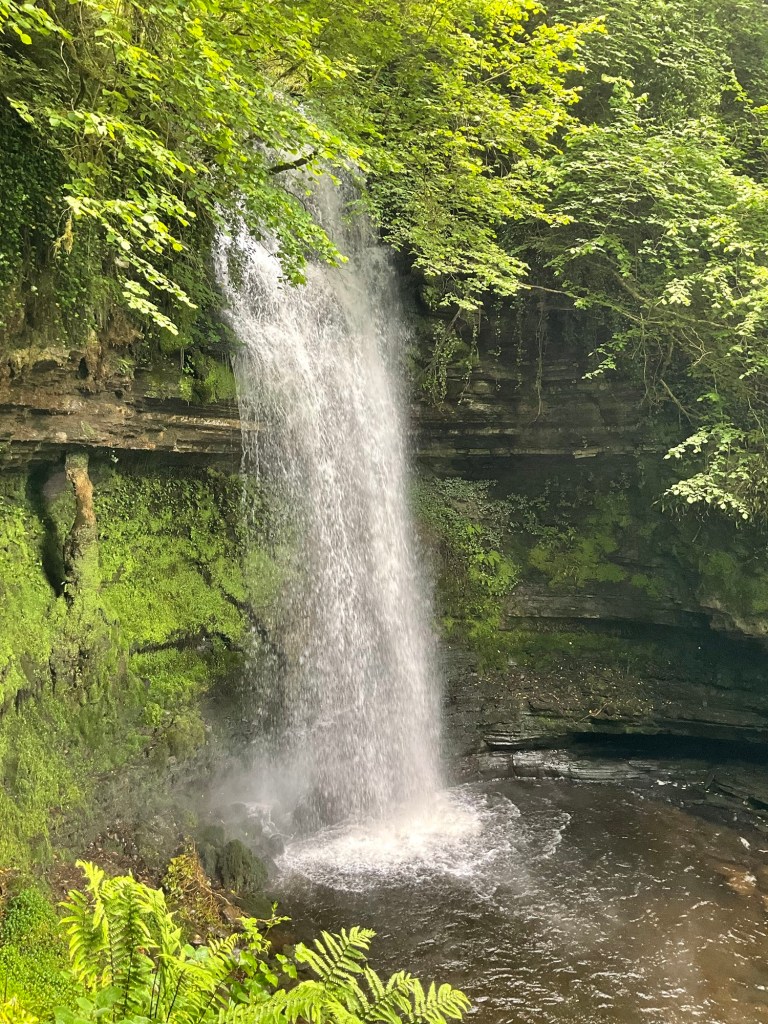
…”Where the wandering water gushes
From the hills above Glen-Car,
In pools among the rushes
That scarce could bathe a star,
We seek for slumbering trout
And whispering in their ears
Give them unquiet dreams;
Leaning softly out
From ferns that drop their tears
Over the young streams.
Come away, O human child!
To the waters and the wild
With a faery, hand in hand,
For the world’s more full of weeping than you can understand…”

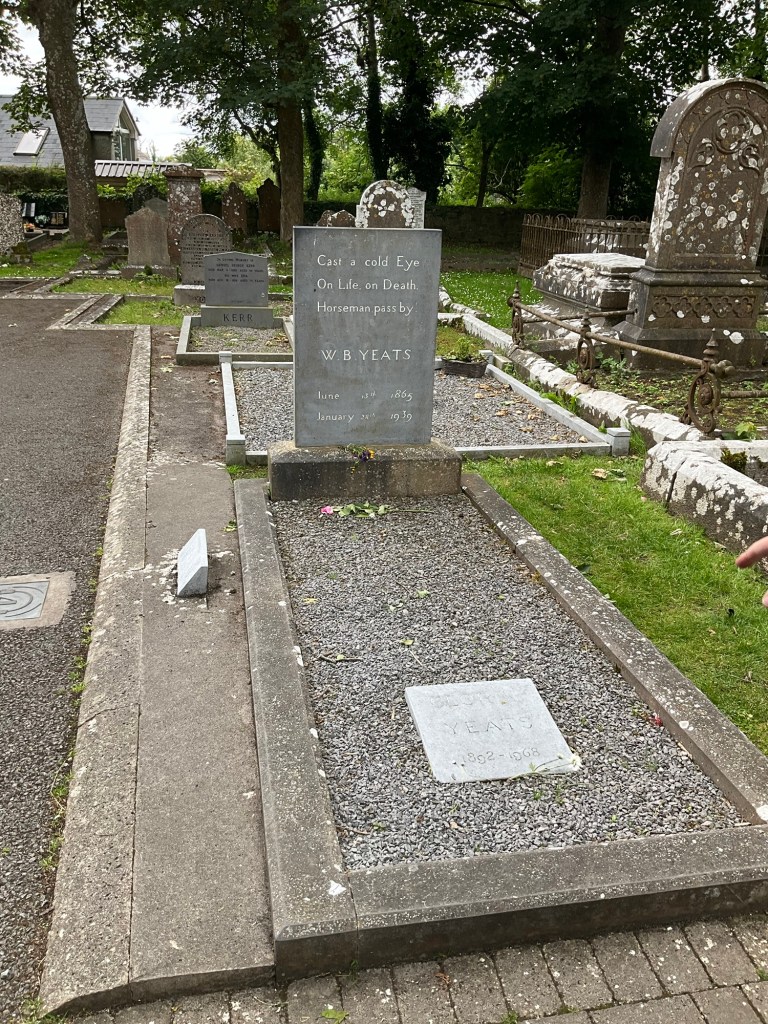
W B Yeats

The falls
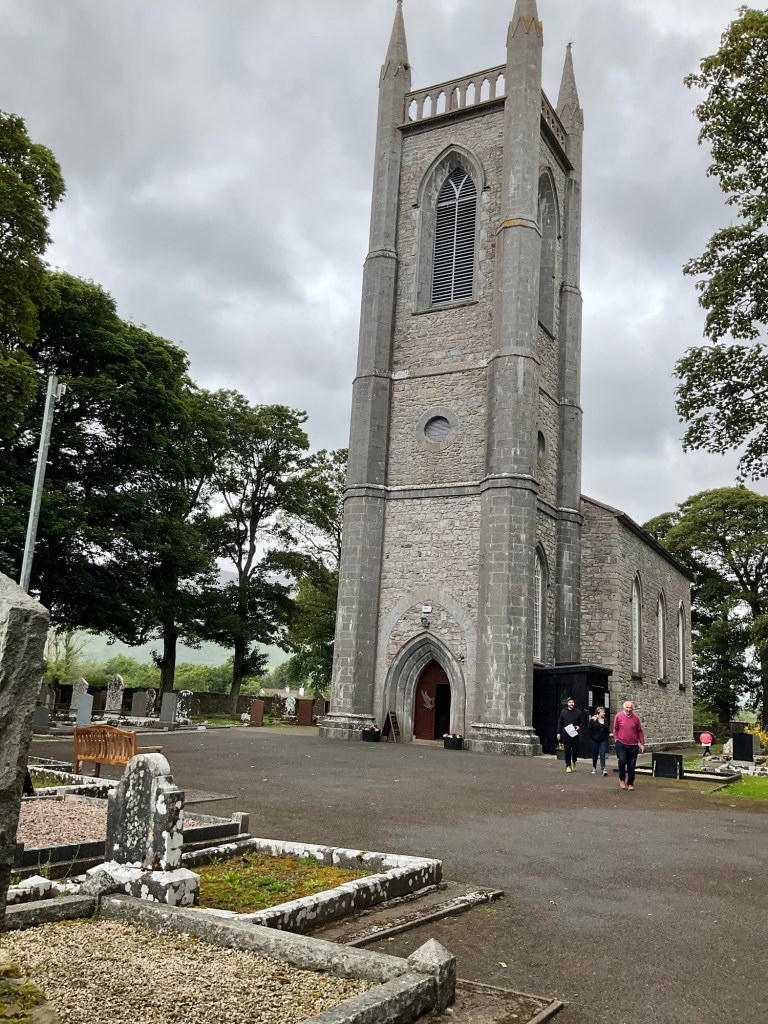
The gravesite
The church